Reducing facility energy cost through systematic audits, targeted improvement programs, and verified savings measurement.
Service Detail
Energy performance work addresses how a facility consumes energy across its mechanical and electrical systems — from utility supply and on-site generation through distribution, conversion equipment, and end-use loads such as HVAC, compressed air, motors, lighting, and process equipment. The goal is to identify where energy cost concentrates, which losses are avoidable, and what changes deliver measurable reduction without compromising operational output.
In Iraq, facilities operate under conditions that compound energy cost: unstable grid supply, heavy reliance on diesel generation, and equipment that was often selected or installed without sizing to actual operating conditions. Compressed air and HVAC systems — two of the largest energy consumers in most industrial and commercial facilities — are frequently oversized, poorly controlled, or maintained in ways that introduce significant unnecessary consumption. Under these conditions, energy cost is often driven by avoidable losses rather than production volume alone.
MesoAxis approaches energy performance through direct field measurement before recommending action — metering, load logging, and walk-through inspection establish a verified baseline rather than relying on nameplate data or utility bill analysis alone. Findings are tied to specific equipment, operating schedules, and utility or generator cost structures. Improvement work is structured as a program — prioritized by cost impact, practicality, and available capital — rather than as isolated recommendations.
Core Capabilities
- Energy Audits
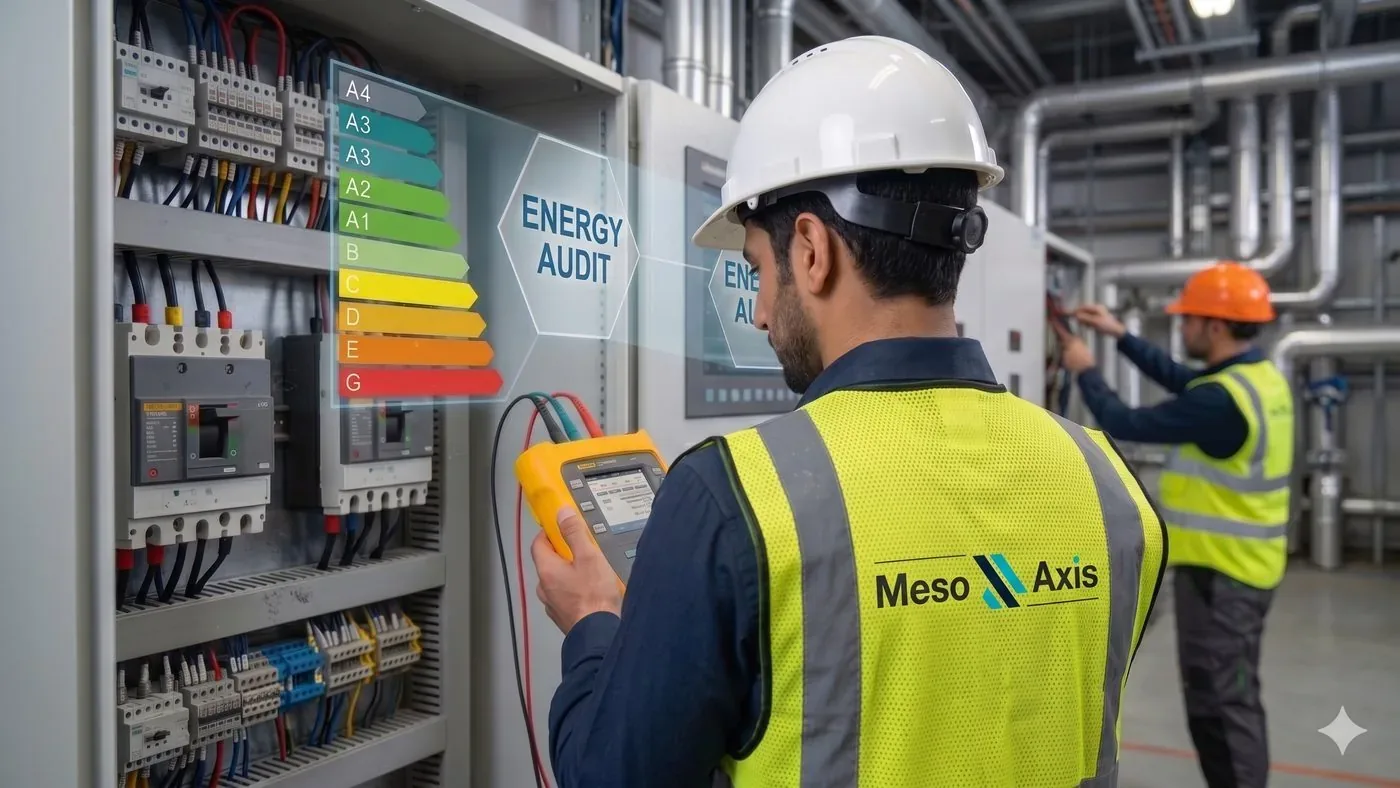
Facility-wide energy audits covering utility billing, generator fuel consumption, and end-use metering to identify where energy cost concentrates and which losses are addressable. Audits are conducted through direct field measurement and produce a prioritized schedule of improvement opportunities tied to actual operating data.
- Energy Cost Reduction Programs
Structured programs that translate audit findings into sequenced improvement actions — prioritized by cost impact, implementation effort, and capital requirement — with defined targets, timelines, and responsibilities. Designed to deliver measurable cost reduction within the facility's operational and budgetary constraints.
- Generator & Utility Optimization
Review of generator loading, fuel consumption patterns, and grid/generator switching practice to identify operating adjustments that reduce blended energy cost without changing production output. Includes assessment of generator dispatch logic and the cost implications of current load-shedding and switching arrangements.
- HVAC Optimization
Assessment of HVAC systems — chillers, air handling units, cooling towers, and associated controls — against actual building or process load, identifying control, scheduling, or maintenance changes that reduce energy consumption. Focus is on closing the gap between design assumptions and how systems actually operate under real occupancy and climate conditions.
- Compressed Air Optimization
Assessment of compressed air generation, distribution, and end-use to identify where energy is lost to leakage, pressure drops, oversized generation, or inefficient demand practices. Compressed air is among the most energy-intensive utilities in industrial facilities, and improvement opportunities are typically significant and achievable without capital-intensive change.
- Measurement & Verification
Structured before-and-after measurement of implemented changes, using the same metering and methodology as the original audit, to confirm whether projected savings were realized under actual operating conditions. Provides documented evidence of realized performance improvement for management reporting and investment justification.
- Energy Performance Improvement Planning
Development of a structured improvement plan that prioritizes recommendations by cost impact, implementation complexity, and capital requirement, and sets out a realistic sequence for implementation. Plans are written as working documents — updated as measures are implemented and results measured — rather than one-time reports.
Industries Served
- Manufacturing & Industrial Facilities
- Hotels & Hospitality
- Commercial Buildings
- Oil & Gas Support Facilities
- Healthcare & Institutional
- Food & Beverage
Why MesoAxis
MesoAxis starts every energy engagement with direct field measurement — metering, load logging, and walk-through assessment — before recommending any change. Findings are grounded in what the facility actually consumes, not what nameplate data or utility bills suggest. Recommendations are tied to specific equipment and operating schedules, so savings projections can be checked against real before-and-after data.
Energy cost in Iraqi facilities is often driven by conditions not apparent from billing data alone: generator loading mismatches, compressed air leakage and pressure drop, HVAC systems running outside their design envelope, and utility structures that penalize certain load profiles. General recommendations that ignore these conditions can produce changes that underperform or create new operational problems.
MesoAxis does not represent equipment suppliers, distributors, or contractors. Recommendations are based on engineering analysis of the facility's own data, which means there is no commercial pressure to recommend capital expenditure when an operational or control change would achieve the same result. Measurement and verification after implementation closes the loop between projected and realized savings.